



Computer System Validation (CSV) Software
Stay audit-ready and validate every GxP system with less manual work, fewer spreadsheets, and no chasing signatures.
What Changes When CSV Runs in Validator
Fewer audit findings
Far less duplicate manual work
Traceability that builds itself as your team works
Workflows configured to your SOPs and regulatory landscape

What Is Computer System Validation?
Computer system validation (CSV) is the documented process of proving that a computerized system, such as a LIMS, MES, or ERP, does what it is intended to do, consistently and in line with GxP requirements. Regulators expect CSV for any system that affects product quality, patient safety, or data integrity, which makes it a core part of regulatory compliance in life sciences.
The work behind it is familiar to anyone who has done it: a validation plan, user requirements, a risk assessment, test protocols for installation, operational, and performance qualification (IQ, OQ, PQ), a traceability matrix, and a validation summary report. Then the system has to stay validated through every patch, upgrade, and periodic review. Much of that effort is documentation and approvals, and that's the part Validator automates.
Why Spreadsheet-Based CSV Breaks Down
Plenty of quality assurance teams still run computer systems validation on spreadsheets, Word templates, and paper signatures. It holds up while the system count is small. As it grows, requirements drift away from the tests that cover them, approvals sit in inboxes, and every upgrade means rebuilding traceability by hand before the next inspection.
Validator brings structure and automation to the whole CSV process, whether you're validating lab, manufacturing, or business systems. It's built around GAMP 5 and the risk-based thinking in FDA's computer software assurance (CSA) guidance, and you configure it to the workflow you already run.
Compliance Associates' own team delivers every implementation. The people who configure your system are the CSV practitioners who built Validator and have run validation programs inside pharmaceutical, biotech, and medical device companies.
All-in-One CSV Tool
- 21 CFR Part 11– e-signatures that use two distinct identification components, as § 11.200 requires for non-biometric signatures
- Automatic audit trail and data integrity controls on every record
- An impact assessment engine that shows what an upgrade touches before you change anything
- A traceability matrix linking each user requirement to its tests and results
- Change control inside the validation workflow, so every change lives in the same record as its validation
- A GAMP 5 lifecycle from user requirements specification to validation summary report
- Risk-based testing that puts effort where GxP risk is highest, consistent with FDA's CSA guidance
- Supplier assessments and vendor documentation
stored with the validation package
How Validator Automates Computer System Validation
Validator follows the GAMP 5 V-model and scales validation effort to each system's GxP impact, complexity, and risk. Every stage, from planning to maintenance, runs in one platform with full traceability.

Planning and Requirements
Validator starts with a validation master plan that fits your quality system. Your team captures functional and non-functional user requirements, then uses GAMP 5 risk assessment tools to set the validation strategy for each system.

Design and Configuration
Validator records every configuration detail and decision. It generates the system configuration specification automatically and traces each requirement into design. Supplier audits and vendor documentation stay in one place, where reviewers and inspectors can find them.

Testing and Verification
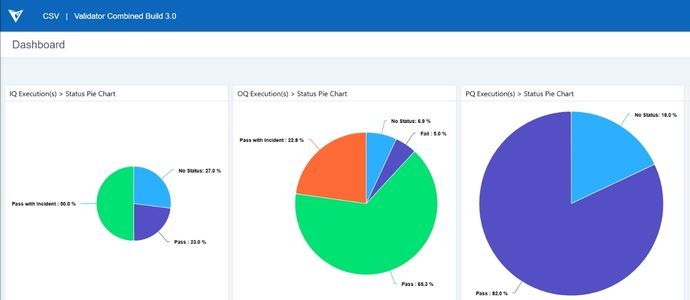
Validator manages installation qualification (IQ), operational qualification (OQ), and performance qualification (PQ). It tracks test execution, records, and deviations as your testers work, and it maps every protocol and result back to its requirement. The traceability matrix stays complete without a manual rebuild.

Reporting and Maintenance
Validator closes each project with a validation summary report. After go-live, built-in change control and periodic review workflows help you keep each system in a validated state through patches, upgrades, and configuration changes.
How Computer Software Assurance Changes CSV
Computer software assurance (CSA) is FDA's risk-based approach to establishing confidence that production and quality system software is fit for its intended use. FDA finalized its guidance, Computer Software Assurance for Production and Quality System Software, in September 2025 and issued an updated version in February 2026. It's guidance, and it applies to medical device production and quality system software.
In practice, CSA asks teams to spend less effort documenting low-risk functions and more effort testing what could affect product quality or patient safety. GAMP 5 Second Edition, published by ISPE in 2022, takes the same risk-based position for software validation across GxP computerized systems.
Validator's risk assessment tools let you scale test effort to risk and record the rationale alongside the evidence, whether your SOPs follow a traditional CSV approach or have moved toward CSA.
CSV Requirements: 21 CFR Part 11, EU Annex 11, and GAMP 5
Validator covers the major regulations and guidance that apply to GxP computerized systems.
FDA 21 CFR Part 11:
- Electronic records with access controls and audit trails
- Two-component electronic signatures
- System access controls
- Record retention and retrieval across the full record lifecycle
EU GMP Annex 11:
- Risk-based validation
- Supplier assessment and management
- Data integrity and audit trails
- Business continuity and disaster recovery planning
GAMP 5:
- Validation effort scaled to risk
- Supplier involvement where it adds value
- Lifecycle maintenance with integrated change control
- A direct connection to your wider quality management system
Backed By Numbers
40%
Time saved on validation projects
300+
Successful client implementations
100%
Audit-ready documentation success
20k
Active users in regulated industries
Industries We Support
Pharmaceuticals, biotechnology, medical devices, and all FDA/GxP regulated organizations rely on Validator for CSV that is practical, scalable, and always aligned to current standards.

Validation Software Built by CSV Practitioners
Validator comes from people who have worked inside life sciences quality assurance and validation teams, led audits, and fixed the regulatory problems those audits turn up. You'll see that experience in how the platform handles four things.

Inspection-Ready Records
Real-time dashboards show the validation status of every system. Your team works from current data, and you can answer an inspector's questions from the record itself.

Integrated With Your Systems
You can configure every connection to your LIMS, ERP, MES, HR, finance, and risk systems without custom code, and adjust it later without a ticket to IT.

Fast ROI with Proven Efficiency
Clients report efficiency gains of 40% or more on validation projects. SaaS customers typically go live in 1 to 2 months, fully configured.

Current With Regulatory Change
When guidance changes, our team works out what it means for Validator and for your configuration, then updates the platform. Your CSV program keeps pace with CSA and global GxP expectations without your team rebuilding templates.
Frequently Asked Questions
What is Computer System Validation (CSV) and why is it important?
CSV is the documented process of confirming that a computerized system, such as a LIMS, MES, or ERP, performs as intended and meets regulatory requirements. CSV is central to regulatory compliance. It protects data integrity, product quality, and patient safety, and FDA and EMA inspectors review it when they assess your systems. Medical device manufacturers face the same expectation for production and quality system software, where FDA's CSA guidance recommends scaling assurance work to risk. Validator automates audit trails and traceability, so the evidence is ready when inspectors ask for it.
Which systems need computer system validation?
Any computerized system that supports a GxP activity or holds GxP records. That usually includes LIMS, MES, quality management and document management systems, chromatography data systems, ERP modules that handle quality or batch data, and spreadsheets used for GxP calculations. Your risk assessment decides how much validation each one needs.
How does Validator automate computer system validation?
Validator automates each stage of the CSV process: planning, risk assessment, protocol generation, execution, approvals, and reporting. It removes manual data entry, builds the traceability matrix as your team works, and keeps validation documentation current between audits.
Can Validator adapt to our company’s unique SOPs and workflows?
Yes. You configure Validator to your procedures, risk models, and approval chains without custom development.
How does Validator handle changes, upgrades, or new systems?
Validator includes change control and impact assessment workflows. Every modification or upgrade is tracked, assessed for risk, and validated, so each system stays in a validated state across its lifecycle.
Can Validator integrate with our other business and quality systems?
Yes. Validator integrates with LIMS, MES, ERP, and other enterprise platforms, so data moves between systems and validation records stay complete.
How quickly can we go live with Validator for CSV?
Most SaaS customers go live in 1 to 2 months. Our team handles configuration and onboarding, so your validation team can start working in Validator right away.
Who supports us during and after implementation?
The team that built Validator. Compliance Associates delivers every implementation and handles support after go-live, so the people answering your questions know both the platform and the regulations behind it.
Can You Trace Every Step Back to Who Did It?
Data integrity and traceability is one of five pillars in our free Validation Performance Scorecard. Answer 15 questions and see how your CSV program rates on traceability, audit readiness, and process control.
Testimonials
Here are a few of our client and their testimonials
