



Software Tour
Standardize your cleaning procedures, automate your schedules, and centralize every record from sampling plans to test results to approvals.
Compliance Management System For Life Sciences Validation Teams
We built Validator as a unified digital compliance management system designed for the entire validation lifecycle within a single platform. By using data-driven components, Validator eliminates fragmented Word documents, spreadsheets, and email threads, and instead provides a complete end-to-end workflow to plan, execute, and verify every stage of your validation requirements. Validator elevates compliance standards for CSV, Equipment Qualification, and Process Validation.
Across implementations, teams typically achieve faster project timelines, allowing for more frequent validation cycles without expanding the core team. Validator eliminates last-minute audit fire drills by ensuring a constant state of inspection readiness. For many organisations, Validator becomes the backbone of their validation compliance programme, reducing compliance effort and improving operational efficiency.
Implemented And Supported By The Creators
Every Validator implementation is delivered by the Compliance Associates team — the same practitioners who designed the methodology and have run validation programmes in regulated environments for over 25 years. Installation and configuration are always performed by CA. No implementation has ever been handed to a third party.
That practice is what makes our implementation record possible:
100% of Validator implementations have gone live successfully. Every one is referenceable. Ask us for a reference client in your segment.

Why Implementation Fails Elsewhere
Winning a contract and delivering on it are two different things. Most validation platforms are sold by one team and implemented by another — a regional partner, a systems integrator, or a consulting firm that was handed the account after the deal closed. That partner wasn't in the room when the platform was designed. They're interpreting documentation, not writing it.
The result: implementations that drag past their timelines, budgets that expand past their estimates, and in the worst cases, organizations that paid for software they ultimately can't use in a regulated environment. The platform vendor points to the partner. The partner points back. Your validation programme is caught in between.
Fixed-Cost Implementation. Every Time.
Validator is the only life sciences validation platform that tells you the price before you sign and the go-live date before you start.
The Four Phases
Phase 1 — Workshop & Planning
Your team and ours define requirements, map your existing workflows, and establish your validation strategy. You leave this phase with a shared, approved plan — no ambiguity about what templates get built, what business rules are configured, or why.
Phase 2 — Configuration & Implementation
We configure Validator to match your approved requirements: your SOPs, your risk approach, your integration needs. No custom development. No waiting on a third party to interpret the spec.
Phase 3 — Validation & Testing
We produce the documented evidence that the system is fit for its intended use in your environment. Your team works through real validation cycles — not staged demonstrations.
Phase 4 — Release & Transition
Validator is approved for GxP use and moved into production. Your team is trained, your workflows are live, and your compliance programme is operational from day one.
What This Means For Your Organisation
- No budget overruns. Your proposal price is your final invoice price.
- No timeline drift. 1–2 months for SaaS. That's a date, not a range.
- No implementation failure. 100% of Validator implementations have gone live. Every client is a reference.
See the four phases mapped to your actual validation environment — not a generic product tour.
How Validator Compares
| Validator | Partner-Led Alternatives | |
|---|---|---|
| Implementation | Direct — by the team that built the platform | Delivered through a regional partner or systems integrator |
| Cost | Fixed before you sign | Time-and-materials; final cost confirmed after the work is done |
| Timeline | 1–2 months, guaranteed | Typically 3–6+ months, variable by partner |
| Go-Live Success | 100% — every implementation | Depends on the partner assigned to your account |
| Ongoing Support | Same team, start to finish | Often reassigned or routed through a different partner |
Validator is the only life sciences validation platform that tells you the price before you sign and the go-live date before you start.
What A Compliance Management System Means For Validation
Most compliance management systems behave like document management tools. They store files and route them for review and approval, but core validation work stays manual: protocols in Word, traceability in Excel, evidence stitched together just before a compliance audit.
Validator is a validation-first compliance management system that prioritises a risk-based approach to ensure the right amount of testing is applied to every project. Where traditional platforms digitize paper, Validator optimises the underlying business process. We shift the focus from static files to the dynamic content and data behind them, so it can:
- Connect directly to enterprise systems
- Eliminate repetitive data transcription
- Reuse structured content across projects and sites
CSA principles are embedded within an aligned logic and reusable content to automate risk-based decisions, documentation, and reporting. Projects move from intake to audit-ready evidence inside one system, and your team can see validation status, risk, and documentation quality at a glance.
When Validator Is The Right Compliance Management System
Validator fits organisations where validation is business-critical and current tools are not keeping up. You are likely a fit if:
- Audits still require heroic efforts to assemble binders and trace matrices
- "Digital" validation still depends on Word, Excel, and email
- You are under pressure to adopt CSA and risk-based validation without a system that supports it
Many leaders we work with have tried generic compliance management software — eQMS, DMS — and still see validation buried in manual effort and compliance gaps. At the same time, regulatory bodies expect stronger, more effective compliance management.
Validator addresses that directly. It automates validation work, reduces compliance risk, and is implemented by people who have run validation and quality programmes in regulated environments. It becomes a core part of your compliance framework and helps you manage potential compliance risks before they become findings.
Core Capabilities Of The Validator Compliance Management System

Automated Validation Workflows
Validator turns CSV, equipment qualification, and process validation into structured, repeatable workflows. New systems and changes go through CSA-aligned risk assessment, and the platform automatically applies the right level of testing and documentation. Low-risk changes are handled efficiently; high-risk work receives deeper scrutiny.

Centralised Documentation And Traceability
All validation artefacts live in one connected record: requirements, tests, deviations, approvals, and reports. Protocols come from templates, traceability is built as people work, and final reports are assembled from data already in the system. Shared content is updated once and reused everywhere, reducing transcription and data integrity risk.

Dashboards For Audit‑Readiness
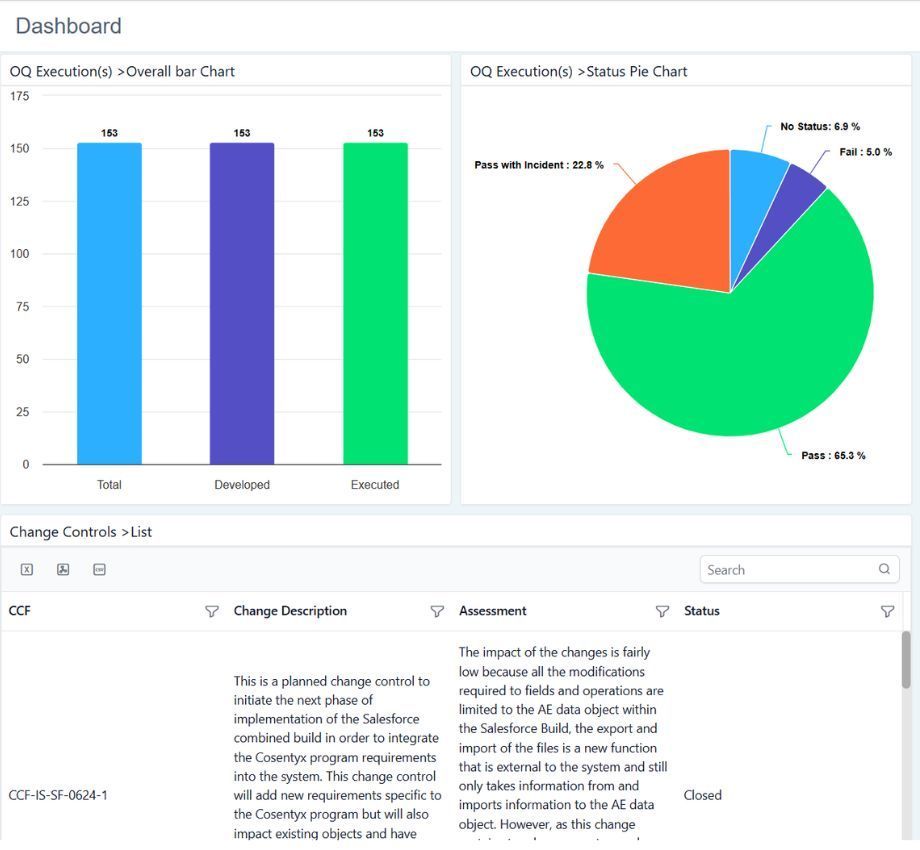
Validator provides dashboards for real-time compliance monitoring. Heads of Quality and validation leaders see status by site, system, or project, along with bottlenecks and higher-risk changes. When an inspection is announced, you generate audit-ready packages directly from Validator instead of creating an "audit project" on the side.

GxP‑Aligned Roles And Collaboration
Role-based access, segregation of duties, and SOP-aligned workflows support strict GxP controls. QA, validation, IT, and manufacturing all work in the same system, within defined roles. That clarity reduces compliance issues and strengthens management oversight.
How A Validation Runs In Validator

Intake And Risk Assessment
New systems, equipment, or process changes are logged directly into Validator with their purpose and scope. The platform guides your team through CSA-aligned risk assessment, identifying your risk tolerance and using structured logic to identify critical functions, potential failures, and impact on quality and patient safety.

Protocols, Execution, And Review
Validator generates protocols, test scripts, and traceability matrices from templates aligned with your SOPs and compliance standards. Execution teams work in the system, recording results and deviations and attaching evidence. QA and validation leads review the complete record and sign off with 21 CFR Part 11-aligned electronic signatures.

Reporting And Reuse
At close, Validator builds final reports and complete validation packages for internal approval and regulatory inspections. Because content and workflows are structured, you can reuse templates, risk logic, and reporting patterns across projects, building a consistent, repeatable compliance program.
How Validator Fits In Your Compliance Landscape
Direct Integrations With Core Systems
Validator is designed to plug into the systems you already rely on:
- Laboratory information management systems
- Enterprise resource planning and enterprise management systems
- Manufacturing execution systems
- Quality management systems
For data-intensive work like process validation and cleaning validation, Validator pulls relevant data from these systems, processes it, and presents it in validation reports and dashboards. That reduces manual data pulls, lowers data integrity risk, and keeps validation aligned with your broader digital ecosystem.
One Source Of Truth For Validation Compliance
With Validator in place, teams see a single, trusted view of what has been validated, where it is used, and how it was tested. You no longer rely on scattered files and side spreadsheets. This improves traceability, everyday decision-making, and your ability to spot compliance gaps before they become issues.
Built For 21 CFR Part 11, Annex 11, GxP And CSA
Validator behaves like a regulated application because it was built for regulated environments:
- Role‑based access and detailed audit logs
- Data handling aligned to data integrity expectations
- Electronic records and signatures that link people, timestamps, and intent
These capabilities support 21 CFR Part 11 and Annex 11 and give you a defensible compliance management programme.
Validator also embeds CSA-aligned, risk-based logic into planning and assessment. Your teams can explain why they focused effort where they did, in ways that align with current guidance and industry standards.
What A Day In Validator Looks Like
For Heads Of Quality And Validation
You start your day in Validator with a dashboard showing validation status across sites and systems: what is on track, where approvals are pending, and where risk is highest. In leadership meetings about upcoming audits, you show current validation status directly from the platform. By the time inspectors arrive, you are prepared instead of rushed.
For Validation And QA Teams
Validation leads select templates aligned with SOPs, walk through risk assessment, and generate protocols and trace matrices. They execute tests in Validator, record results and deviations, and attach evidence. QA reviewers see the entire chain in one view and can pull complete evidence packages in minutes when auditors ask.
Results That Show The System Works
In demanding life sciences environments, Validator consistently delivers:
- More efficient validation with less manual effort
- Shorter timelines and fewer last‑minute fire drills
- More validations completed with the same or fewer resources
- Smoother, more confident audits and fewer compliance issues
Teams move from firefighting to foresight and use Validator to drive digital maturity in quality and validation.

See Where Automation Would Help Most
Before you evaluate software, find out where your current process actually needs it. The Validation Performance Scorecard rates your documentation automation, workflow enforcement, and three other pillars in about five minutes.
Frequently Asked Questions
How much does Validator implementation cost?
Validator's SaaS implementation is fixed-cost, confirmed before you sign. The number in your proposal is the number on your final invoice — there are no time-and-materials surprises once the work begins.
How long does Validator take to implement?
SaaS deployments go live in 1–2 months, guaranteed. That timeline is a commitment, not an estimate, and it's built into every Validator engagement from the Workshop & Planning phase forward.
What is included in Validator's fixed-cost implementation?
Every implementation includes all four phases: Workshop & Planning, Configuration & Implementation, Validation & Testing, and Release & Transition. Installation and configuration are always performed by Compliance Associates' own team — the same practitioners who designed the platform's methodology.
What happens if my organization needs an on-premises deployment?
On-premises deployments follow the same four-phase process as SaaS, on a timeline scoped during Workshop & Planning based on your environment. Reach out to discuss your specific requirements and we'll confirm a timeline before you sign.
